

Four important points for sheet metal processing:
1. When using Gas Metal Arc Welding (GMAW) and FCAW to weld steel (sheet metal processing cabinets) workpieces, if the plate thickness of the workpiece exceeds the maximum welding current that the welding machine can reach, how will it be treated. The solution is to preheat the metal before welding. Use propane, standard gas or acetylene welding torch to preheat the welding area of the workpiece, with a preheating temperature of 150-260 ℃, and then proceed with welding. The purpose of preheating the metal in the welding area is to prevent the welding area from cooling too quickly and not causing cracks or incomplete fusion in the welding seam.
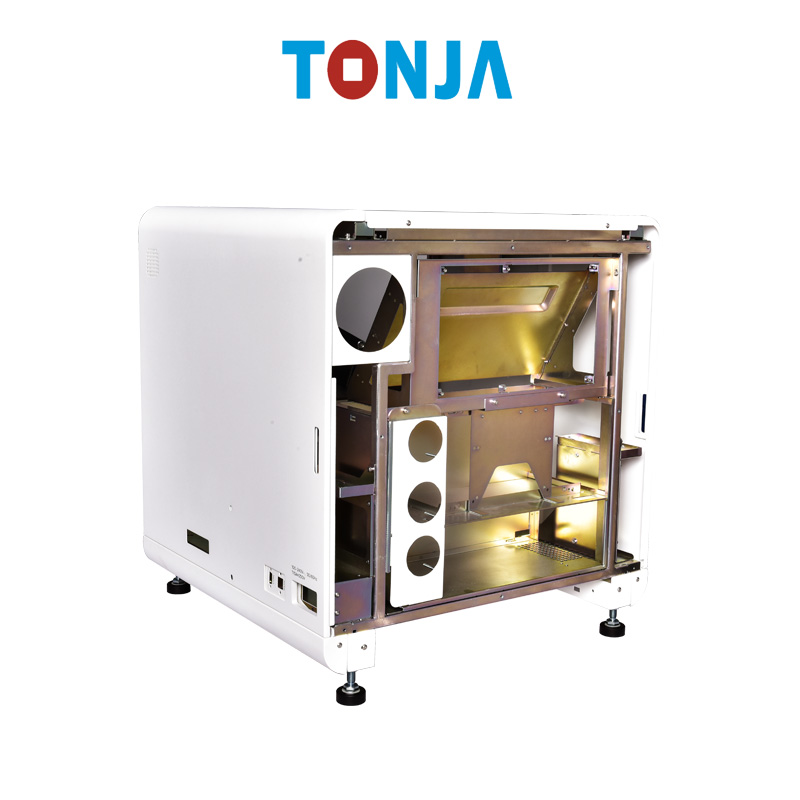
2. If a thin metal cover needs to be welded to a thicker steel pipe (sheet metal processing machine cabinet) using melting electrode gas shielded welding or flux cored wire gas shielded welding, if the welding current cannot be adjusted correctly during welding, it may lead to two situations: first, to prevent the thin metal from burning through and reduce the welding current, the thin metal cover cannot be welded to the thick steel pipe at this time; Secondly, excessive welding current can burn through the thin metal cover. How should we handle it at this time? There are two main solutions
(1) Adjust the welding current to suit the welding of thick steel pipes (sheet metal processing cabinets). When welding, maintain the residence time of the welding arc on the thick steel pipe at 90% and reduce the residence time on the thin metal cover. It should be pointed out that only when proficient in this technology can good welding joints be obtained.
(2) Adjust the welding current to avoid burning through the thin metal cover, and preheat the thick steel pipe with a welding torch. Then, use the thin plate welding process to weld the two metal structures.
3. When welding a thin-walled round pipe or rectangular thin-walled pipe fitting onto a thick plate, the welding rod is prone to burn through the thin-walled pipe part. Is there any other solution besides the above two methods? Yes, mainly using a heat sink during the welding process. If a solid round rod is inserted into a thin-walled round tube, or a solid rectangular rod is inserted into a rectangular pipe fitting, the solid rod will take away the heat of the thin-walled workpiece and prevent burning through. Generally speaking, solid round or rectangular rods are tightly installed in most supplied hollow or rectangular tube materials. When welding, attention should be paid to keeping the weld away from the end of the pipe, which is the weakest area that is most prone to burn through. Use a built-in heat sink to avoid burning through.